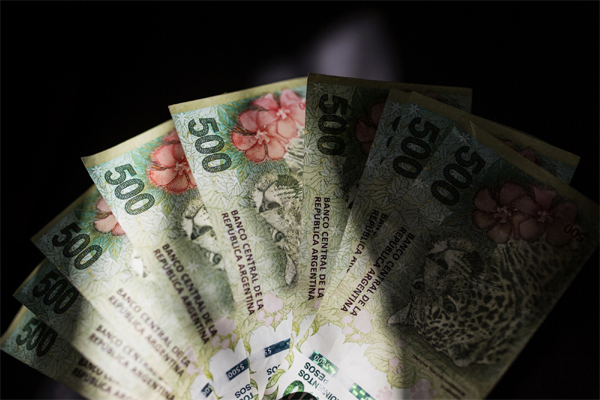
Central bank may be pushed into a one-time devaluation: BTG
Ignacio Olivera Doll. Bloomberg News
BUENOS AIRES
EnergiesNet.com 07 12 2022
Argentina’s parallel exchange rate is heading for a fall; a fall so big it may drag down the official peso with it.
The need to increase the monetary base to meet payments on peso debts and finance spending, plus a drop in agricultural exports and an increase in energy imports all spell trouble for the Argentine currency.
The so-called ‘blue-chip’ exchange rate is likely to slump about 40 percent to 340 pesos to the dollar by year end, said Alejo Costa, head of strategy for Argentina at BTG Pactual. That in turn could lead the Central Bank to devalue the official exchange rate at least 10 percent toward the end of the third quarter, breaking its two-year policy of a controlled, gradual decline.
“The parallel peso is going to be under more pressure than all region’s other currencies given local politics and risks,” Costa said from Buenos Aires.
Argentina’s Central Bank has sold US$589 million so far in June to defend the peso, while it bought US$627 million in the same period last year. That has helped push the bank’s foreign currency reserves down about US$3.4 billion this month.
“Argentina may have to accelerate the crawling peg or be forced to make one-off moves in the exchange rate,” said Alejandro Cuadrado, head of foreign exchange strategy for Latin America at BBVA in New York. “It is too tight to meet the accumulation of reserves required” by the country’s programme with the International Monetary Fund.
The Economy Ministry did not immediately reply to a request for comment. A Central Bank spokesman pointed to a recent report that said it would continue to pursue policies that ease concerns over the exchange rate and inflation.
Monetary expansion
Argentina’s money supply is rising at an annual pace of 53 percent from 30 percent at the beginning of the year, fuelling demand for goods and the dollars needed to buy imports. The peso expansion is one of the main factors that analysts see behind inflation, and therefore, the peso depreciation.
“There will be a lot of monetary expansion during the second semester, fundamentally due to the fiscal deficit,” Costa said.
The government is still rolling over peso debt as it comes due, but only just. What’s more, it’s barely able to raise additional funds to finance spending this year. Costa warned the country may soon struggle to even roll over the debt, most of which is inflation-linked.
Agricultural exports
Argentina’s main harvest season is over, and while they typically sell crops soon after, this season soybean producers are holding onto much of their crop waiting for a better price. Some analysts don’t expect them to sell until there’s a devaluation.
Farmers have 18.5 million tons of soybeans this year, or 44 percent of the total harvest, less than the average of the last five years for that period, the Rosario Board of Trade said in its weekly report.
“Producers will continue to hold onto their output until the peso drops or commodity prices start to fall,” said Lucrecia Colletti, leader of the exchange desk in Banco Provincia de Buenos Aires. “But I see all this as difficult if the Ukraine-Russia war continues.”
Energy imports
At the same time as harvest dollars are lacking, Argentina must allocate greenbacks to pay for gas imports after failing to meet the winter demand with domestic production. That is becoming more and more expensive as the war in Ukraine pushes up oil and gas prices.
In May, energy imports consumed one of every five dollars raised by soybean exporters in the foreign exchange market. From July, they are likely to soak up one in every three.
“It’s very difficult for the central bank to accumulate a significant amount of reserves” with such a large gap between the blue-chip and official exchange rates, said Alejandro Giacoia, economist at Buenos Aires-based consulting firm Econviews. “This problem can only be solved by raising the official exchange rate, and the government does not seem to be willing to do that.”
bloomberg.com 06 29 2022