Argus Media
QUITO
EnergiesNet.com 07 18 2022
Ecuadorean balsa wood producers are working with the government on a strategy to mitigate the impact of low prices and demand for the product for the construction of wind turbines since last year.
Ecuador is the world’s largest exporter of balsa wood, according to the Global Development Policy Center of Boston University, with China the main consumer, as it has significantly expanded its wind farm portfolio in the past 10 years.
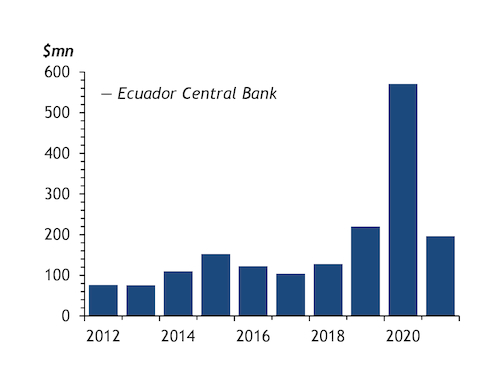
Ecuador’s balsa wood sales hit a record in 2020 when it exported $570mn worth of the product, according to domestic wood industries association AIMA. Around 75pc of that was used to manufacture wind turbine blades.
But the value of the exports dropped by 66pc to $196mn in 2021 as balsa wood demand, mainly from China, decreased and balsa wood prices tumbled, AIMA chief executive Christian Riofrio says. Exports this year remain low, with the country exporting 108,500kg in January-May, according to Ecuadorean customs data, 18pc less compared with the same period in 2021, although Riofrio projects higher overall shipments this year.
Balsa wood is an endemic plant in Ecuador that has been exported from the country for more than 80 years. It was mainly used by the Ecuadorean navy and the aviation industry until the 1990s. But in the late 20th century, it started to be used in the construction of wind turbine blades, prized for its flexibility, resistance and low weight.
China in 2010 launched a plan to increase its wind power capacity by 200GW by 2020, Riofrio says, and that generated huge expectations among balsa producers, which started to invest to expand their operations. But demand slowed in the following years because the country had to build the grid needed to transport electricity from the wind projects.
Balsa wood demand increased exponentially in 2018-20, Riofrio says, as the Chinese government pushed to achieve its initial goal and subsidised wind projects. The market registered an excess of demand that elevated prices, generated an over-exploitation of some crops, and even created a black market. By 2020, China was buying 77pc of Ecuadorean balsa wood exports, followed by the EU with 12pc and the US with 11pc. But Chinese demand dropped in 2021 and the market became uncertain.
Wood for the trees
Riofrio says market conditions and an unpredictable outlook make it difficult to match the supply of balsa wood producers with demand since it takes 3-4 years from sowing to harvesting a forest. The issue has prompted producers to work with various government ministries to formulate a plan to keep internal balsa wood production steady and offset the variations in the international markets, ensuring that local producers can make a reasonable profit irrespective of high or low demand overseas.
Ramon del Pino, chief executive of Plantabal — Ecuador’s largest balsa exporter with 35pc of the market — says the impulse for renewable energies under President Joe Biden’s administration in the US and the fossil fuel energy crisis in Europe are favourable factors for the Ecuadorean balsa wood industry in the coming years.
China currently accounts for 40pc of Ecuadorean balsa exports, followed by Europe with 35pc and the US with 25pc, del Pino says. The cultivation of balsa wood is also used to generate carbon credits because producers are not only carbon neutral but help absorb greenhouse gases and replace the use of fossil fuels with wind generators.
Ecuador’s balsa wood exports
argusmedia.com 07 13 2022