Exxon
Map showing the location of the Yellowtail field in proximity to other significant discoveries in the Stabroek Block.
By Kaieteur News
GEORGETOWN
Petroleumworld 11 08 2021
Even though American oil explorer, ExxonMobil has faced five years of unrelenting criticism for refusing to provide Guyana with full coverage insurance on its Liza Phase One, Liza Phase Two and Payara Projects, the company appears hell-bent on continuing this trend for its fourth development—the $1.8 trillion Yellowtail Project.
Currently, Guyana only has insurance from the subsidiaries of the ExxonMobil, Hess Corporation, and China National Offshore Oil Corporation, or CNOOC Group on the Stabroek Block. Given that these companies hardly have any assets or cash, the insurance coverage in the event of an oil spill would be miniscule, to say the least. As a result of this, local stakeholders have urged the government to not only correct this state of affairs by tying the parent companies to full coverage insurance for the first three sanctioned projects, but they have also demanded better arrangements for Exxon’s Yellowtail Project, which the government is now racing to approve by the end of this year.
In its Environmental Impact Assessment (EIA) on Yellowtail, ExxonMobil categorically stated that the insurance for the project would be provided for in the name of its subsidiary, Esso Exploration and Production Guyana Limited (EEPGL). The document which was lodged with the Environmental Protection Agency (EPA) says, “Joint insurance coverage is obtained in the name of EEPGL and the other Stabroek block co-venturers for the appropriate lines of coverage, depending on the project and scope of work. Specifically, for the Yellowtail Project, the co-venturers have insurance coverage including Third Party Liability and the cost of regaining control of a well.”
Just recently, Vice President, Dr. Bharrat Jagdeo noted that the government is working on securing as much as US$2B for insurance from ExxonMobil instead of full coverage. He said this move follows criticisms over the last few years, to the effect that the country has no formal guarantee from the parent company that it would cover the shortfall of expenditure for environmental disasters, which are not handled by its subsidiary. He said it was an “implicit” understanding that this would be done. He is now working to get the parent company to acknowledge this obligation to protect the nation from any and all environmental dangers associated with its operations.
ABOUT YELLOWTAIL
” EEPGL, the operator of the Stabroek Block, had explained via the Environmental Impact Assessment for the Yellowtail Project that the costs for development are expected to be above US$9B, since there would be a greater number of development wells and associated drilling costs when compared to its Payara project, which will also cost Guyana $1.8 trillion.
Despite the astronomical costs, Exxon believes that the project should be supported as it would generate benefits for the citizens of Guyana in several ways, which would otherwise not be there in the absence of the project.
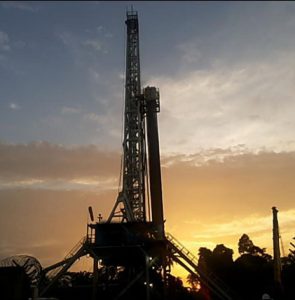
According to project documents, Yellowtail will consist of drilling approximately 41 to 67 development wells (including production, water injection, and gas re-injection wells); installation and operation of Subsea, Umbilicals, Risers, and Flowlines equipment; installation and the operation of a Floating, Production, Storage and Offloading (FPSO) vessel in the eastern half of the Stabroek Block; and— ultimately—project decommissioning.
Initial production is expected to begin by the end of 2025–early 2026, with operations continuing for at least 20 years. The project is expected to employ up to 540 persons during development well drilling, approximately 600 persons at the peak of the installation stage, and 100 to 140 persons during production operations.
______________
By Kaieteur News
kaieteurnewsonline.com / 11 07 2021
Copyright© 1999-2021 Petroleumworld or respective author or news agency. All rights reserved.
We welcome the use of Petroleumworld™ (PW) stories by anyone provided it mentions Petroleumworld.com as the source.
Other stories you have to get authorization by its authors. Internet web links to http://www.petroleumworld.com are appreciated.
Petroleumworld welcomes your feedback and comments, share your thoughts on this article, your feedback is important to us!