Venezuela and Brazil gain market share in Asia as refiners hedge against supply risks.

Petroleumworld/EnergiesNet
SAN DIEGO
EnergiesNet.com 08 14 2026
As global refining dynamics adjust to Middle Eastern supply tensions and shifting sanctions risks, South American crudes are securing a significantly larger footprint in Asia, led by expanding shipments from Venezuela and Brazil to India, the world’s third-largest oil importer.
According to reporting and trade source data cited by Reuters’ Nidhi Verma, Latin America’s share of India’s total crude oil import basket expanded sharply from 3.5% to 12.7% during the April–July 2026 period. Verma reports that this growth was driven primarily by an influx of crude shipments from Venezuela and Brazil.
Production Momentum in South America
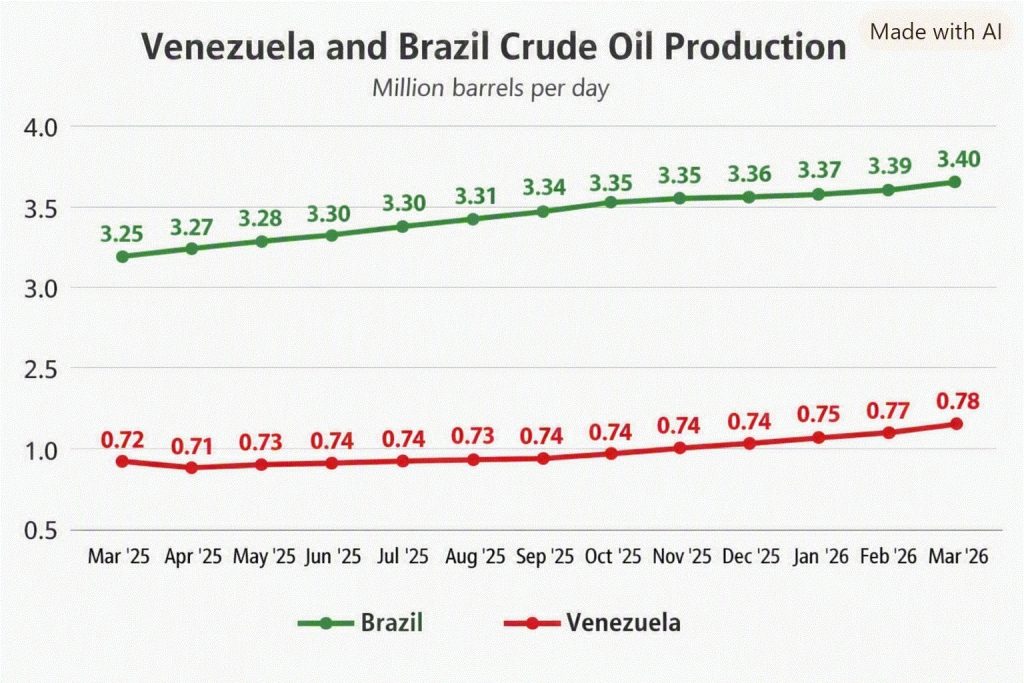
The Latin American commercial surge in Asian markets is backed by solid domestic production performance across both major South American producers:
-
Venezuela: According to OPEC secondary-source data, Venezuelan crude oil production reached approximately 1.07 million barrels per day (bpd) in June 2026, maintaining production above the 1-million-bpd level and supporting the country’s growing ability to supply international markets.
-
Brazil: Government data show Brazilian crude oil production reached a record 4.475 million bpd in June 2026, an increase of 4% from May and 19.1% from June 2025, driven largely by continued growth in offshore production.
Indian refiners, operating advanced and flexible processing facilities capable of handling a broad range of crude qualities, have increasingly integrated South American barrels into their processing slates, including heavier Venezuelan grades such as Merey and Brazilian grades such as Lula and Tupi. Reuters has reported increased Indian imports from Brazil and Venezuela, including heavier grades, during the April–June quarter.
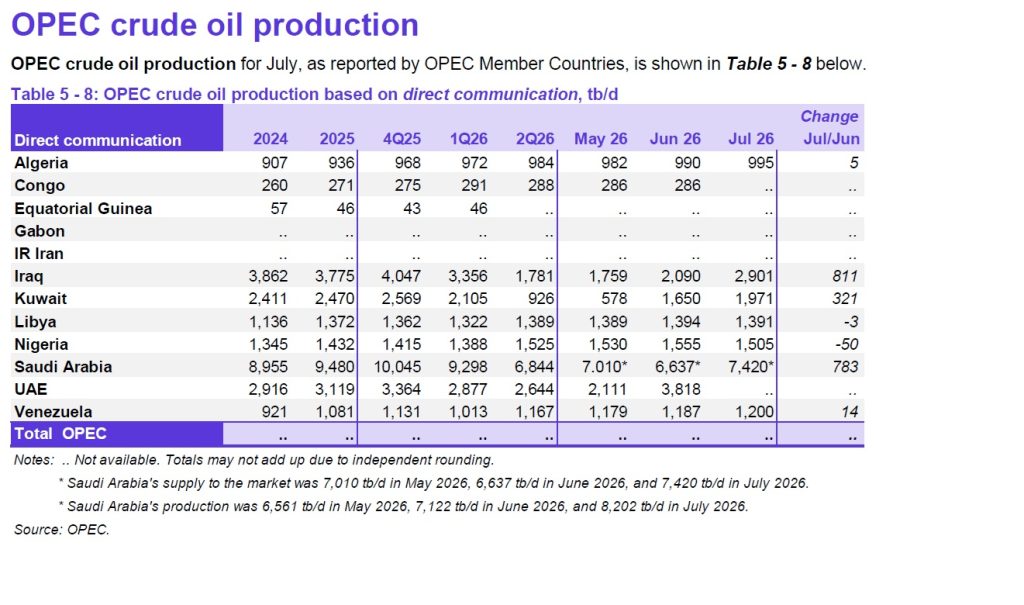
Market Opportunities Driven by Geopolitical Friction
The rising intake of Venezuelan and Brazilian crude coincides with major realignments across India’s traditional supply corridors, as detailed in Verma’s report:
-
Middle Eastern Supply Compression: According to Verma, Middle Eastern exporters saw their combined share of the Indian crude market decline from 43% down to roughly 30% over the April–July timeframe due to regional shipping disruptions.
-
Looming Sanctions Risk on Russian Imports: While Russia remained India’s primary supplier—accounting for a record 50.83% of imports, or 2.47 million bpd, in July—Indian refiners face rising trade uncertainty following legislation passed by the U.S. Senate that would authorize tariffs of up to 100% on buyers of Russian oil. The legislation still requires approval by the U.S. House of Representatives before it can become law.
As Indian refiners seek commercial alternatives to guard against Middle Eastern geopolitical friction and potential tariff risks on Russian barrels, South American suppliers—led by Venezuela and Brazil—are emerging as crucial pillars of supply security for Asia’s refining sector.
EO
Revision: 08 14 2026 – 19:00 GMT
EnergiesNet-Petroleumworld 08 14 2026