Marco Aquino and Marianna Parraga, Reuters
LIMA/HOUSTON
EnergiesNet.com 05 31 2022
As liquefied natural gas (LNG) producers try to take advantage of a global energy shift triggered by Europe’s move to become independent from Russian gas, Latin America’s only two LNG exporters are moving in opposite directions.
In Peru, LNG shipments are ramping up fast with special emphasis on Europe, where a combination of firm demand and high prices has been luring exporters this year. That is despite Peru’s political turmoil and threats to nationalize the gas industry, which roiled the sector last year.
But Trinidad and Tobago, Latin America’s largest LNG producer with enough reserves and capacity to meet a portion of the incremental demand, has been unable to reverse an export fall expected to continue for a third consecutive year in 2022 as it struggles to bring more gas output online.
“Europe became an intense market in March and April, consuming all the fuel it could get due to abrupt cuts from Russia,” said Rafael Zoeger, former president of Peru’s state-run company and regulator Perupetro. “Everything now is getting rejigged in the wake of the war.”
From the Americas, LNG shipments are dominated by the United States, which last year exported a record 9.7 billion cubic feet per day (cf/d) amid booming demand and growing liquefaction capacity. The United States is expected to become the world’s largest LNG exporter this year.
Russia’s invasion of Ukraine and resulting shunning of its fuel in Europe have changed the preferred markets for allocating LNG cargoes, prompting producers to sign medium-to-long-term supply contracts with customers in Europe.
Peru is getting ahead of its neighbor in that race. Perupetro reported a total of 37 LNG cargoes shipped from the Pisco port from November through May, with almost half of them delivered in Europe.
Peru LNG, a consortium comprised of Shell (SHEL.L), U.S.-based Hunt Oil Corp, Japan’s Marubeni Corp (8002.T) and South Korea’s SK Group, is in charge of LNG exports from the country.
So far this year, Peru has shipped 26 cargoes carrying some 1.8 million tonnes of LNG (4.09 million cubic meters), a 74% increase versus the same period in 2021, according to Refinitiv Eikon data. Fifteen cargoes went to Spain and the United Kingdom. The remaining ones headed to Asia, which last year was the preferred market for Peruvian LNG, the Eikon data showed.
Financial services firm Ebury said in a note this month that Peruvian LNG exports to the UK, for example, soared to over 1 billion pounds ($1.26 billion) between November 2021 and March 2022. That was up from just 80 million pounds over a three-year period prior to that.

FAR BEHIND
The outlook is not as bright for Trinidad, the country with the fourth-largest natural gas reserves in Latin America. Venezuela, Argentina and Brazil, the nations with the biggest gas deposits in the region, have not built infrastructure to export LNG or are not producing enough.
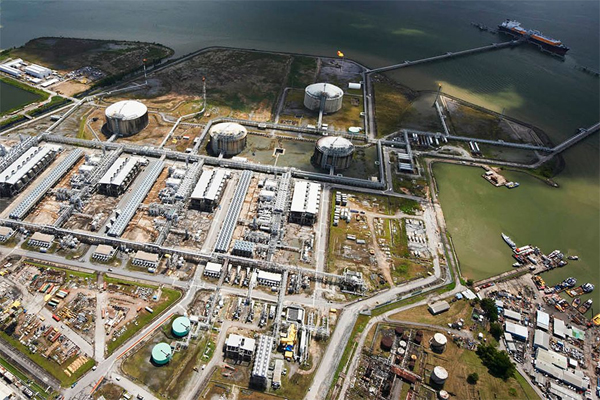
Trinidad’s gas output has dwindled in the last decade, according to BP Statistical Review of World Energy, amid obstacles to developing its expensive offshore reserves. In consequence, the country’s flagship Atlantic LNG project has been unable to fully operate its four liquefaction trains.
The Caribbean country’s energy ministry did not reply to a request for comment.
In 2021, the partners of the 15 million-metric-tonne facility in Point Fortin – BP (BP.L), Shell, Repsol (REP.MC), Suez LNG and state-controlled NGC Trinidad – shut the first train, followed by a decision to restructure ownership of the remaining three.
While the government and private gas producers in Trinidad decide how to ramp up output, exports are poised to fall this year from 7.9 million tonnes shipped in 2021, a lost opportunity amid buoyant LNG demand and high prices in Asia and Europe.
In 2014, Trinidad exported over 14 million tonnes of LNG, according to Eikon data.
($1 = 0.7918 pound)
Reporting by Marianna Parraga in Houston and Marco Aquino in Lima Additional reporting by Marcelo Rochabrun in Lima and Linda Hutchinson in Port of Spain Editing by Matthew Lewis
reuters.com 05 31 2022