Europe risks getting into a bidding war with China for gas supplies as it moves to rapidly reduce its dependence on Russian energy
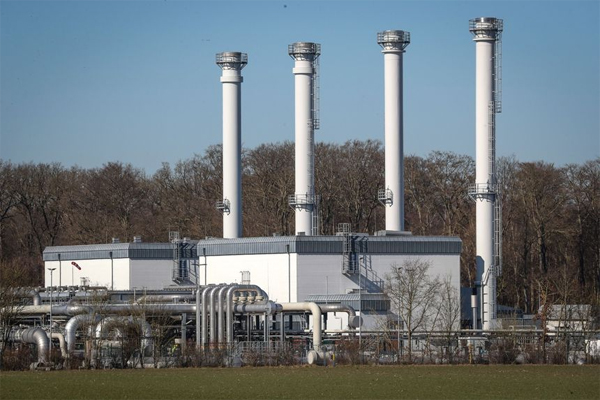
(Focke Strangmann/Shutterstock)
Rochelle Toplensky, WSJ
LONDON
EnergiesNet.com 03 15 2022
Europe’s ambitious plan to cut its reliance on Russian gas by two-thirds this year just might work. But it will come at a price—economically or environmentally.
The European Union is expected to release another round of sanctions this week covering industries such as steel and luxury goods, but the kind of bans on Russian energy introduced by the U.S. and U.K. aren’t on the table. The bloc’s road map to end its dependence on Russian fuels by 2027 already gives it plenty to do.How Europe’s Russian gas imports could be reducedAmount of Russian gas import offset for 2023Source: European Commission (EU’s plan); Bruegel (Gas to coal)New renewables include wind, solar & heat pumps.EU target for 2023EU’s planAdditional options020406080100120140160billion cubic metersGas to coal switchingEnergy efficiencyNew renewablesBiomethaneNon-Russian pipelinesLNG imports
The EU wants to reduce Russian gas imports from the current annual run-rate of about 155 billion cubic meters to around 55 billion cubic meters next year. It can source about 10 billion cubic meters more gas through existing pipelines from Norway, Algeria, and Azerbaijan, but it will also need to buy five times that amount as liquefied natural gas.
Europe probably has enough import capacity to make it work, but it will mean the complications and inefficiencies of moving more fuel around the bloc. Spain, France and Italy have multiple LNG terminals but Germany, the bloc’s biggest gas importer, has none as it previously opted to rely on Russian pipelines. It now plans two LNG facilities, but these will take years to build.
Then there is the question of supply. With Washington’s help, Europe imported a flood of LNG in the first two months of this year, but it will be very expensive to win that much of the limited global spot market indefinitely. Between 40% and 50% of China’s LNG imports in the last two years have been spot volumes, but that fell to only 10% to 20% in January and February, says Sindre Knutsson, an analyst at consulting firm Rystad Energy. China and Europe risk getting into a bidding war as they look to refill inventories.
Eventually, Europe can lower LNG costs by signing long-term supply contracts for expansion facilities in the U.S. or Qatar. The earliest these could come online is 2024, said Mr. Knutsson.
The EU also plans to increase the energy efficiency of buildings and homes to save 14 billion cubic meters annually, including 10 billion cubic meters from turning down heat by 1 degree Celsius in buildings. The bloc has a patchy record of hitting efficiency targets, but today’s high energy costs and public goodwill in the war effort against Mr. Putin should help it do more this time.
commodities like coffee, copper or corn can have little to do with the price customers pay at the store.
WSJ’s Dion Rabouin explains. (Illustration: Adele Morgan)
If these measures don’t work, there are dirtier options. For now, the EU plans don’t include switching on mothballed coal-fired power plants, which could offset as much as 40 billion cubic meters, says Simone Tagliapietra of EU think tank Bruegel.
Some so-called demand destruction is also likely as industrial users cut projects rendered uneconomic by higher costs. Historically, demand was destroyed when oil costs exceeded 4% of gross domestic product, says Neil Beveridge, an analyst at Jefferies. They are now at 4.5%.
Investors have a few ways to buy into the EU plan. Energy-efficiency suppliers Schneider Electric and ABB are already profitably capitalizing on the electrification megatrend. Wind turbine makersVestas, Nordex and Siemens Gamesa look set to gain, though they are particularly exposed to cost inflation. Renewable developers Iberdrola, Enel and EDP will likely also benefit, as could LNG suppliers Shell, Equinor and Cheniere Energy, though some of these companies face a risk of windfall taxes.
It remains unclear who will end up footing the bill for higher energy costs. Most likely the pain will be broadly shared by governments, consumers and companies. Europe can do without Russian gas, but its economy will take a hit.
Rochelle Toplensky at rochelle.toplensky@wsj.com
Appeared on Thw Wall Street journal in the March 15, 2022, print edition as ‘Europe’s Energy Security Comes at a High Cost.’