Venezuela’s oil operations, investment climate, and export flows under renewed U.S. influence.
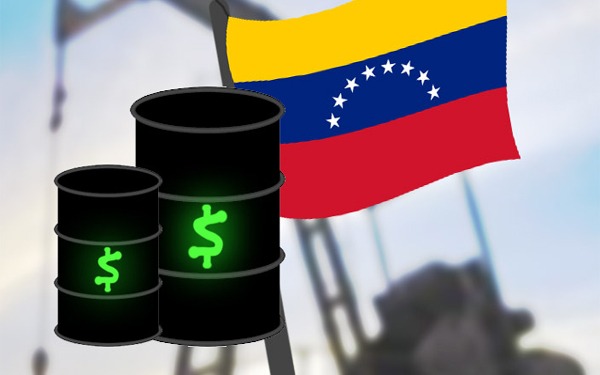
Maduro’s capture opens a new phase in U.S. regional strategy, with Venezuela’s oil industry at the core of the transition.
Elio Ohep – EnergiesNet
PHOENIX
EnergiesNet.com, January 16, 2026
The capture of Nicolás Maduro by U.S. forces marked the most forceful American intervention in the region since the 1989 operation in Panama, according to reporting from AP and Time. Nicolás Maduro, Venezuela’s strongman and longtime ruler, was captured by U.S. forces and transferred to New York to face federal narcotrafficking charges. His wife, Cilia Flores, former president of the National Assembly, was also taken into U.S. custody under related charges.
In the days following the operation, President Donald Trump outlined a clear position on Venezuela’s immediate future, framing Maduro’s removal as both a legal action and a strategic reset for the country’s political and economic direction. Trump stated that “we are going to run Venezuela until such time as we can do a safe, proper, and judicious transition,” adding that he would not specify who would be in charge because “it’ll be very controversial.”
Maduro and Flores were transferred to New York under previously unsealed indictments, reinforcing the administration’s argument that the Venezuelan leadership had been given multiple opportunities to step aside peacefully. Secretary of State Marco Rubio, who has been vocal about Venezuela’s oil sector in recent weeks, stated that “Venezuela’s oil belongs to the Venezuelan people, not to a criminal regime,” underscoring that any transition must prevent PDVSA from being used again as a political instrument.
Following Maduro’s capture, Trump said the United States would temporarily oversee Venezuela’s transition, including the management of oil production and crude sales to international markets. Under this framework, major companies would handle commercialization while Venezuela continued to receive royalties and taxes under existing legal structures. This approach effectively sidelines PDVSA in the short term, with U.S. authorities and private operators expected to manage upstream and export operations while dismantling corruption networks tied to the previous regime.
Trump also signaled that Venezuela’s economic recovery will depend on establishing a new legal and investment framework capable of attracting foreign capital. Analysts note that while the administration promises rapid stabilization and increased output, significant investment will require guarantees that are not yet defined. This remains a central uncertainty for companies evaluating a return to the Venezuelan energy sector.
The operation has generated reactions across Latin America. Reporting from international outlets, including AP and Time, indicates that the U.S. stance reflects a shift toward a more interventionist posture in the hemisphere, with Venezuela emerging as the first test of what some analysts describe as a 21st‑century version of the Monroe Doctrine. The Monroe Doctrine, first articulated in 1823, established the principle of “Americas for the Americas,” asserting that external powers should not intervene in the political affairs of the Western Hemisphere. While originally aimed at deterring European influence, the doctrine has evolved over time and is often invoked to describe periods of heightened U.S. involvement in regional affairs.
For the oil sector, the implications are immediate. Venezuela holds the world’s largest crude reserves, but production has collapsed after years of mismanagement, sanctions, and operational decline. Trump’s plan to place U.S. oversight on upstream activity and crude sales introduces a new commercial and regulatory environment that could accelerate output recovery, depending on how quickly legal and operational frameworks are defined.
Energy specialists, including Francisco Monaldi and Marianna Parraga, have published extensively on Venezuela in recent weeks. Monaldi warned that “without a credible legal framework, no major company will commit capital to Venezuela,” emphasizing that investment decisions depend on enforceable rules and long‑term contractual stability. Parraga noted that “Venezuela’s oil sector remains constrained by operational decay and legal uncertainty,” highlighting that companies are waiting for clarity on sanctions, contracts, and control of upstream operations before committing resources.
Executives across the industry share similar concerns. According to news agencies, ExxonMobil CEO Darren Woods has reiterated that major energy investments require long‑term stability and a predictable legal framework, stressing that companies will not commit capital where the rules can change overnight.
Despite the promises of rapid stabilization, uncertainty remains the defining factor for Venezuela’s oil sector. Executives from major oil companies stress that no significant investment will move forward without a new legal framework that guarantees stability and operational security. Until such a system is clearly established and backed by institutional credibility, the Trump plan faces structural limits. The transition may open the door to new opportunities, but without legal certainty, the path ahead for Venezuela’s oil recovery remains uncertain.
Sources: AP, Reuters, Bloomberg, BBC, Time, Voice of America, OilPrice, international media, EnergiesNet analysis.
Elio Ohep, Editor EnergiesNet, editor@petroleumworld.com
EnergiesNet.com 01 16 2026