The region’s top energy leaders met in La Jolla for the conference’s 35th edition and agreed: the resources are there, and long-term legal stability will decide the rest

By Elio Ohep, EnergiesNet-Petroleumworld
La Jolla, California
EnergiesNet.com 10 24 2026
When the La Jolla Energy Conference started, the energy debate in the region was about privatization and opening markets. Thirty-five editions later, the participants who met in La Jolla on October 13–15 talked about shale, LNG, offshore gas, data centers and critical minerals. In 35 years the change has been big, mainly because of technology. A review of the period prepared by the Institute shows how much: world energy use rose about 85%, oil production passed 100 million barrels a day for the first time in 2025, and fossil fuels still supply about 86% of the world’s energy. Shale turned the United States from an importer into an exporter of oil and gas. Brazil multiplied its oil output six times with the pre-salt, Argentina more than doubled its gas with Vaca Muerta, and Guyana went from nothing to a major exporter. But one concern came up in almost every session: whether the rules will be respected over time.
The conference brought together senior executives, investors, regulators, former ministers and policy experts from across the Americas, the people who make and shape energy decisions in the region. The general view was very optimistic, but with conditions. Latin America and the Caribbean have a real opportunity to develop their energy sectors as their economies grow, natural gas is at the center of that opportunity, and clear rules, respected in the long run, will decide how much of it is achieved. Trust, more than anything, was seen as what keeps markets stable.
This matters more today. According to the Energy Institute’s Statistical Review of World Energy, the Americas produced 37.6 million barrels a day of oil in 2025, compared with 31.1 million in the Middle East. The Americas passed the Middle East in 2019, and the difference has kept growing. With the Gulf again under attack and shipping through Hormuz disrupted, the Americas look like a very secure option for both energy investment and supply, and the mood at the conference was positive despite the turmoil. There was also talk about a possible change in the U.S. Congress after the midterms, but the general view was that it would not change much for energy.

Venezuela: optimistic, with concerns
The Venezuela session drew the most attention, and the view was optimistic but with several concerns. The regulatory changes approved this year were generally seen as a positive step, and the agreements announced so far are expected to bring moderate production increases by the end of next year, in the Orinoco Belt and in the northeastern and northwestern producing regions. The estimate was around 1.2 million barrels a day by 2027. Going much higher will be difficult with the present conditions for investment, but things are changing fast, especially with Chevron, and new investment in greenfield projects could raise production more in three to five years. The development of Monagas Norte with Eni is important because its light crude can be blended with the extra-heavy oil of the Faja.
The concerns were also clear. The main one is legality: the legal standing of the government and of the contracts and agreements signed with it, including those with the United States, which in the eyes of much of Venezuelan society are wrong. That is a legal risk investors have to take into account. The other big concern is infrastructure. To produce more oil, the country needs electricity, pipelines, and port facilities that are not there yet. The work with major equipment makers to restore idle power plants was seen as encouraging, and so were the plans for a new law to allow private investment in the power sector. Even so, the full recovery will take decades and a lot of capital.
Gas is another big source of energy for Venezuela. Much of it is flared today in the eastern fields. The 1999 gas law was considered strong enough to attract investment, and the offshore resources near Paraguaná and in the east, including the Dragon field and the Loran-Manatee field shared with Trinidad and Tobago, could supply the local market as the economy grows and be monetized through Trinidad, with possible exports to Colombia as well. For Trinidad, whose own gas production has peaked and whose LNG exports have fallen, that gas is just as important.

Guyana: growth with care for the environment
Guyana’s president, Irfaan Ali, was one of the main attractions of the conference. He was honored with the Institute’s Leadership in the Americas award but could not attend in person and instead sent a video message of about 21 minutes from Georgetown making the case for Guyana. His message was clear: democracy and the rule of law are the base of development, and without them there can be no investment. Oil and gas are a great opportunity, but not the country’s only destiny. Guyana has put its oil revenue in a natural resource fund set by law and is investing it in its people and in diversifying the economy into agriculture, tourism, technology, and renewable energy, with natural gas as a transition fuel.
He also made clear, in a recent interview with CNN, that Guyana respects the production sharing contract with ExxonMobil and its partners, signed by the previous government, even where it is not happy with specific terms. For investors, that is the most important signal a government can send.
The environment is at the center of his plan. Guyana keeps more than 99% of its original forest cover, some 18 million hectares, which absorb far more carbon than the country emits. Its forests must be preserved, and its resources developed with care, and the country is earning revenue from carbon credits, with part of it going directly to indigenous and hinterland communities.
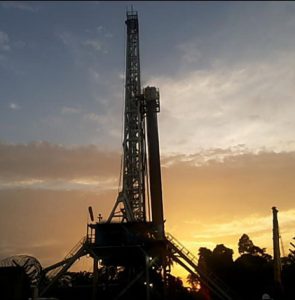
In just a few years Guyana has gone from no oil production to an installed capacity of more than 900,000 barrels a day from four ExxonMobil-operated FPSOs. A fifth unit, at the Uaru field, is expected to start before the end of this year, and ExxonMobil expects capacity to reach 1.7 million barrels of oil equivalent a day by 2030 from eight developments. Guyana is the success case of the region and a clear example of what stable rules can achieve.
The Caribbean: small countries, big lessons
The Caribbean session showed that the region is on its way to becoming a global center of oil and gas production. Guyana, Trinidad and Tobago, Suriname, Venezuela, and Colombia together could be producing around 4.7 million barrels of oil equivalent a day by 2030. But growth of that size requires large investment in infrastructure, shore bases, and trained people.
The small size of Caribbean countries is both a problem and an advantage. Small islands with small power grids are hard to run on intermittent renewables, especially when hurricanes hit, and small populations mean shortages of skilled workers. Integrating labor markets, coordinating policy and connecting power grids between countries were all seen as part of the answer, and small-scale LNG, now easier with new technology, is becoming a practical solution for small markets that works well with renewables. The shift to natural gas for power has already started in Jamaica, Barbados, the Bahamas, and Guyana.
The advantage is speed. Once the right conditions are in place, small governments can move fast. Guyana is the clearest example, and in Trinidad and Tobago, ExxonMobil’s new deepwater block moved quickly through the process, and the negotiations were not slowed down by an election and a change of government halfway through. Delays in the cross-border fields between Trinidad and Venezuela had more to do with events outside the Caribbean.

Mexico: real needs and a key partner
Energy needs in Latin America are real. The region’s economies are growing, and growth needs energy. In Mexico this is very clear. Its oil production peaked in the early 2000s and has been falling, its own gas output is declining, and it now depends more and more on gas piped from the United States. Gas is the base of the power system, but supply is not secure and infrastructure is behind demand, while new data centers will need more power and long-term planning. LNG projects and new pipelines could change the picture. The energy relationship with the United States is essential for Mexico, and it is working well.

Critical minerals: the next opportunity
Energy is not the only resource on the table. The conference also looked at critical minerals, where the Americas have extraordinary reserves and a chance to strengthen energy security, attract investment and build their own value chains. Today the region depends heavily on China for processing and recycling these minerals. The question now is how countries can turn that mineral wealth into lasting economic growth, adding more value at home and building more secure supply chains. Doing that will take long-term investment, new technology, regional cooperation and support from local communities. The Institute used the conference to launch its Critical Minerals Program, which will bring together governments, industry, investors and policy experts, building on its recent reports on the hemisphere, Argentina and Brazil.

Oil and gas back on the agenda
Argentina, Mexico, Colombia and Brazil are moving again to develop their oil and gas resources, and gas is part of every case. In Argentina, Vaca Muerta changed the country’s energy strategy, and Argentina is now a net oil exporter. The RIGI investment regime offers long-term stability and arbitration guarantees, and LNG exports are finally coming, with the first cargoes expected in 2027–28. In Colombia, the new government is trying to bring back stability after years of regulatory uncertainty. It is changing direction back toward conventional energy sources without slowing down the gains made in non-conventional sources. Brazil, even with strong political polarization, keeps solid energy fundamentals, a clean energy matrix and steady foreign investment, and is focused on replacing reserves in the Equatorial Margin and expanding its gas capacity. Offshore gas in the region is plentiful, enough for some 30 years.

Stability, the most important factor
Beyond the country sessions, the conference also looked at the bigger picture. Latin America is politically close to the United States but has growing economic ties with China, and its natural resources give it more weight in a world with more powers. And the fast growth of data centers for artificial intelligence is putting new pressure on power grids and water, faster than the grids can keep up. In every case the answer was the same: long-term planning, faster permits and reliable rules.
Across the region, governments change from left to right and back. In some countries that changes little beyond the rhetoric; in others, Venezuela most of all, it has changed completely how foreign capital is treated. The Caribbean shows another way: governments there usually respect signed agreements even when elections bring new leaders. That is a lesson the rest of the hemisphere, including the United States, can learn if it wants energy investment to keep coming.
The future is bright for energy in Latin America and the Caribbean, with lower emissions as gas replaces more polluting fuels, if there are clear rules respected in the long run. In energy, where projects take decades, contracts are sacrosanct; that is the most important condition for investment. If the projects are right, the funding will have to come from multilateral lenders. The resources are there. What is most important is stability.
Elio Ohep, editor@petroleumworld.com
EnergiesNet.com 10 24 2026