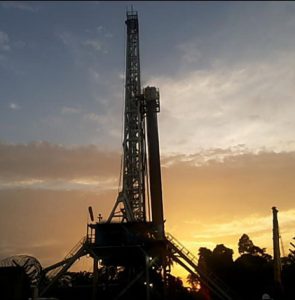
Same oil, same men, new flag: the questionable partnership behind Venezuela’s first cargo to Texas.
By Elio Ohep, EnergiesNet-Petroleumworld
SAN DIEGO, California
EnergiesNet.com 11 01 2026
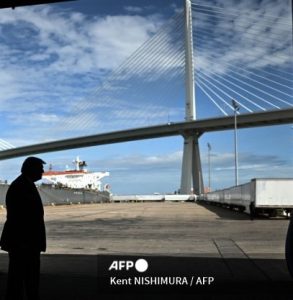
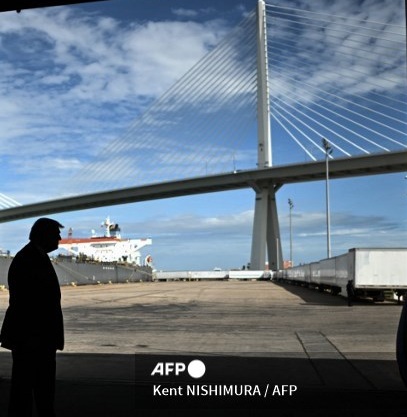
On October 27, two tankers carrying one million barrels of Venezuelan crude arrived in Corpus Christi, Texas. President Donald Trump and Secretary of State Marco Rubio went to the port to see one of them. The oil was produced by North American Blue Energy Partners (NABEP), which said it delivered this first cargo to the US government at no cost to taxpayers, to mark the start of its agreement with Washington.
Washington presents the cargo as proof that its Venezuela policy is working. Behind it, however, there is a questionable partnership and dubious dealing. NABEP is run by Alejandro Betancourt, a Venezuelan businessman who made his fortune with the Chávez regime, and since late August the US government has been his partner. Under the deal signed with the Departments of State and War, Washington holds a 35% stake in NABEP’s parent company and the right to buy 20% of its production at cost, with no markup.
The question is not whether the oil arrived. It did, in just over a week, as Betancourt was quick to point out. The question is how a company with Betancourt’s history became Washington’s chosen partner in Venezuela, and what that says about the deal.
Why Betancourt, and not the oil companies
Washington needed someone who was already inside, and the oil companies that knew Venezuela best were not available. Hugo Chávez expropriated the projects of ExxonMobil and ConocoPhillips in 2007. ConocoPhillips later won a US$8.5 billion award at the World Bank’s ICSID, US$10.7 billion counting a separate ICC award, while Exxon’s award was cut to US$77 million. Venezuela faces more than 20 arbitrations, most of them unpaid. Those companies will not come back without being paid, and never under the rules of an illegitimate regime whose laws are not likely to survive a democratic government.
To understand 2007, one has to go back to the oil opening of the 1990s, the Apertura Petrolera. With prices low, PDVSA brought in private, mostly foreign, investors under three kinds of arrangements, with PDVSA as partner: operating agreements to revive marginal fields, risk exploration and profit-sharing agreements, and strategic associations to produce extra-heavy crude in the Orinoco Belt, S&P Global reported. In all, there were 32 operating agreements, eight risk and profit-sharing agreements and four Orinoco associations, Petrozuata, Sincor, Cerro Negro and Hamaca, according to SMU’s Law and Business Review of the Americas. In the Orinoco associations the foreign partners held the majority, and PDVSA’s stakes ranged from 30% to 49.9%. The international companies invested more than US$17 billion in those projects, the Associated Press reported.
Chávez undid the opening. In 2006 the operating agreements were replaced by mixed companies, the empresas mixtas, controlled by PDVSA. In February 2007, Decree 5200 forced the Orinoco associations and the risk agreements into mixed companies with PDVSA holding at least 60%, and on May 1 PDVSA took operational control of the Orinoco projects, S&P Global reported. ExxonMobil and ConocoPhillips refused the new terms and left, while Chevron, BP, Total and Statoil signed and stayed as minority partners, AP reported. Staying came at a price: the partners lost control of operations and finances to PDVSA, and over time PDVSA stopped paying them. In 2021 TotalEnergies and Equinor, the former Statoil, handed their non-operated stakes in Petrocedeño, the former Sincor, to PDVSA’s CVP for a symbolic amount, and Total booked a US$1.38 billion loss, S&P Global reported. By 2022, eight foreign companies had transferred or given up their stakes in PDVSA’s joint ventures, forgoing unpaid debts and dividends, Reuters reported. That is the model under which PDVSA Petrozamora was born. The January 2026 reform of the hydrocarbons law repealed Decree 5200.
Francisco Monaldi, director of the Latin America Energy Program at Rice University’s Baker Institute, has made the point clearly. Oil companies do not care about democracy, he said, “they do focus on the rule of law,” and he does not expect stable rule of law in Venezuela without a transition to democracy, he told the Washington Office on Latin America (WOLA). He also warned that the hydrocarbons law reform gives the oil minister enormous discretion over taxes and contracts. He estimates that taking Venezuela from 1 million to 4 million barrels a day would take a decade and about US$100 billion, according to Fortune.
The companies that stayed, Chevron, Shell, Repsol and Eni, adapted to the regime’s rules and kept their arrangements, and they grow at their own pace, with their own money, on ground they already know. Chevron’s chief financial officer told the Financial Times the company would not raise spending to speed up its expansion in Venezuela, focusing instead on lifting output from existing operations. In September, Chevron announced it will invest more than US$7 billion over five years to double its Venezuelan output to about 600,000 barrels a day, expanding its Petroindependencia joint venture into two adjacent areas of the Carabobo region, Reuters and the Associated Press reported. That is a company present in Venezuela since 1923, growing next to its own fields.
Washington wanted oil now, not in ten years. Betancourt offered a shortcut: mature fields already producing, and a man with the key on both sides, in Caracas with the regime and in Washington with Trump’s people. In our reading, Washington bought access, not the capacity to operate.
The contrast with another candidate says a lot. Ali Moshiri, former president of Chevron for Africa and Latin America, is now chief executive of Amos Global Energy, a Houston company founded in 2017. He has US$2 billion from about 15 investors ready to deploy, and in September he complained to Bloomberg that PDVSA was slow to respond, with no process and no sense of urgency. Amos signed to buy Sinopec’s 32% stake in PetroParia, a deal still waiting for an OFAC license, and already holds 8% of that venture through Inepetrol, according to Diario Las Américas and OE Digital. A career oilman with US$2 billion ready waits at the door. A company founded in 2024, whose chief has a murky past, gets fields ready to produce. What does NABEP have that Moshiri does not?
The man: Derwick and the power emergency
To understand why Betancourt, one has to go back to the beginning. He and Francisco Convit, childhood friends, studied together at one of the private Catholic schools in southeast Caracas. In 2007, with Pedro Trebbau, they founded Derwick Associates.
Their big chance came with Venezuela’s electricity emergency of 2009 and 2010. Derwick, with no experience in the power sector, won 12 contracts from state energy companies in just 14 months, starting with the Picure plant in Vargas state for Corpoelec, followed by 11 more through PDVSA, CVG and Corpoelec, the Organized Crime and Corruption Reporting Project (OCCRP) reported. In all, 11 new plants and the modification of an existing one, worth about US$5 billion, with advance-payment clauses that meant Derwick did not have to put up its own money to buy equipment.
How much did Derwick make? Transparencia Venezuela calculated in 2018 that 11 of the plants, billed at about US$5 billion, should have cost US$2.1 billion, an overcharge of about US$2.9 billion, or 138%, as OCCRP and the BBC reported. A 2017 National Assembly commission that examined part of the projects found that Derwick billed US$1.5 billion for work that should have cost about US$551 million, a 173% overcharge, according to OCCRP. Energy auditor José Aguilar has also accused Betancourt’s companies of overbilling, The New York Times reported. Derwick has denied any overpricing and says it delivered the work. Opposition leader María Corina Machado has said Betancourt profited from the power crisis without solving Venezuela’s electricity shortages. The young men behind Derwick became known in Caracas as the “bolichicos.”
That is where Betancourt’s friendship with chavismo began. It would open the door to oil.
The reward: PDVSA Petrozamora and the Russians
In 2011, Betancourt, Trebbau and Convit set up Derwick Oil & Gas in Barbados, associated with Russia’s Gazprombank through a Dutch vehicle, Gazprombank Latin America Ventures, according to the Miami Herald and the Spanish newspaper ABC. A year later PDVSA Petrozamora was born, a joint venture with PDVSA holding 60% and a Russian partner linked to Gazprombank holding 40%, according to Reuters. At the same time, Betancourt and Convit quietly obtained rights over seven blocks in Lake Maracaibo, the Organized Crime and Corruption Reporting Project (OCCRP) found. In our view, this first step into oil was the reward for their help during the power emergency.
PDVSA Petrozamora was formally created by decree on March 6, 2012, between PDVSA’s Corporación Venezolana del Petróleo (CVP), with 60%, and Gazprombank Latin America Ventures B.V., with 40%, to operate the Bachaquero Tierra and Lagunillas Tierra fields, according to the Gaceta Oficial. These are among the oldest fields in the country, part of the Bolívar Coastal Field on the eastern shore of Lake Maracaibo, found in the drilling boom that followed the Barrosos-2 gusher of 1922 at Cabimas: Lagunillas in 1926, Tía Juana in 1928 and Bachaquero in 1930, according to the AAPG Explorer. Gulf drilled the discovery wells at Lagunillas and Bachaquero, Petroleum Magazine noted, and for half a century the area was worked by the concessionaires, among them Shell, Gulf and Creole, the Standard Oil affiliate. After the reconversion of 1976 it passed to Maraven and Lagoven, the PDVSA affiliates that took over from Shell and Creole. The operating affiliates, four at the start and three by then, disappeared in the restructuring led by PDVSA president Luis Giusti: PDVSA announced the plan in 1997, and from January 1998 Lagoven, Maraven and Corpoven were eliminated and PDVSA took over their operations directly, Oil & Gas Journal reported. Lagunillas production peaked in 1967, according to Wood Mackenzie. In 2015 the National Assembly added the lake areas Bloque VII Ceuta, Bloque II Bachaquero and Bloque III Centro, making it, according to PDVSA, the first mixed company with operations both on the lake and on land in western Venezuela. In 2017, PDVSA said the venture covered more than 2,000 square kilometers and produced 110,000 barrels a day. By 2024, when NABEP was founded to operate it, it was down to about 18,000 barrels a day, according to NABEP.
The state partner is no ordinary affiliate. The Corporación Venezolana del Petróleo was created in April 1960 at the initiative of Juan Pablo Pérez Alfonzo, minister of mines and hydrocarbons under President Rómulo Betancourt, the same year he helped found OPEC. It was Venezuela’s first state oil company, born under the policy of “no more concessions” to win back oil activities for the nation from the foreign concessionaires, according to Fundación Polar’s Diccionario de Historia de Venezuela. With the reconversion of the industry in 1976, PDVSA took over, and today CVP is the PDVSA affiliate that holds the state’s share in the mixed companies, including PDVSA Petrozamora. The irony is hard to miss: the company created to end the concessions now holds the state’s share in fields that Washington says were handed out in 100-year concessions.
The money followed the Russian route. In April 2013, Betancourt signed a letter authorizing the transfer of US$12.9 million to Gazprombank Latin America Ventures, according to ABC. In November that year, Gazprombank agreed to an oil prepayment of up to US$1 billion for PDVSA Petrozamora, Reuters reported. By 2015, PDVSA Petrozamora’s profits were flowing to Latin American Ventures in Luxembourg, according to OCCRP.
PDVSA Petrozamora also helped bring down a PDVSA leadership. In September 2017, officials of PDVSA’s western division were detained over the overpricing of PDVSA Petrozamora equipment. On November 30, 2017, former oil minister and PDVSA president Eulogio Del Pino was arrested together with Nelson Martínez, and PDVSA Petrozamora was among the accusations against him. In our reading, Del Pino and his team were the last technical managers PDVSA had. Manuel Quevedo, a National Guard major general and former housing minister with no known energy experience, took over as both oil minister and PDVSA president, Reuters reported.
Behind the Russian side were two men. GPB Global Resources, a Netherlands-based company founded in 2011, a year before PDVSA Petrozamora, was run by Boris Ivanov and Sergey Tagashov, both former Gazprom executives who had also worked for the Russian government, Bloomberg reported in 2020. Ivanov worked on arms control in Moscow and Washington before moving into banking. By then, with other foreign partners pulling back under the sanctions, GPB was pumping about 10% of Venezuela’s oil through PDVSA Petrozamora, and in practice had operational control, managing the venture’s finances, something rare in Venezuela.
Gazprombank sold its indirect stake in 2019 to an undisclosed buyer, Reuters reported. Then in September 2022, PDVSA seized the 40% held by GPB Global Resources, replaced the board and took full control of the venture, according to Bloomberg. Argus reported that PDVSA workers were told to keep the Russians’ exit secret.
Betancourt’s past did not stay in Venezuela. He has been investigated in Miami, Spain and Switzerland. Reuters could not determine when US federal prosecutors dropped their money-laundering investigation, or whether that happened in exchange for his cooperation with the Trump administration. Spanish authorities opened a new money-laundering probe last year, Reuters said, and Zurich prosecutors told El País their investigation continues. NABEP says Betancourt has never been charged with any crime in any country, and Rubio has said he has no open investigations in the United States.
Delcy’s door
The door to Betancourt’s return was opened by Delcy Rodríguez. Vice president since 2018 and economy and finance minister from September 2020, she shaped the 2020 Anti-Blockade Law, a scheme that drew friends of the regime into the oil business, as Diario Las Américas and Armando.info have reported. Tareck El Aissami, oil minister since April 2020, resigned in March 2023 in the PDVSA-Cripto scandal and was arrested on April 9, 2024. Whoever got in the way left; whoever was useful stayed. On August 27, 2024, Delcy took over the Oil Ministry.
By then NABEP already existed. Betancourt founded it in April 2024 with Harry Sargeant III, a Florida businessman and Trump golfing partner who has worked in Venezuela since the 1980s, buying and exporting asphalt, Reuters reported. In our reading, the two were partners in the asphalt business under the sanctions. In May 2024 his company Global Oil Terminals got a US license to keep buying Venezuelan asphalt, according to Bloomberg Law. He is also a Trump donor: his company gave US$325,000 to the pro-Trump super PAC America First Action in 2018, and he gave US$100,000 to the Trump Victory Fund in 2019, E&E News reported. Reuters described his contacts with Delcy. PDVSA Petrozamora’s fields became the core of NABEP’s production, according to Reuters.
Evanan Romero put it plainly to Diario Las Américas: Sargeant handles a small sector, asphalt, and took advantage of the fact that the serious companies left because of the sanctions.
The arrangement
In 2025, the arrangement moved to a new level. According to The Guardian, in the fall of that year Delcy and her brother Jorge Rodríguez, behind Maduro’s back, promised Washington their cooperation once Maduro was gone. The regime denied the report, and Trump told NBC there were no prior contacts. In our reading, Delcy was useful in convincing Trump to remove Maduro and leave her in charge, guaranteeing, through Betancourt, PDVSA oil practically ready to ship.
Maduro was captured on January 3, 2026, and Trump backed Delcy. Reuters reported that Betancourt was key to US plans before the capture and that he attended meetings at Miraflores Palace. Mauricio Claver-Carone, a former Trump envoy who acted as Washington’s unofficial manager of Venezuela policy, reporting to Rubio, acknowledged to Reuters that he and others in the US government had used Betancourt as an intermediary with Delcy’s government. On July 31, Claver-Carone told Reuters he no longer oversaw Venezuela policy; several sources said he had been forced out. Sargeant was pushed aside too. On February 12, Trump wrote on Truth Social that Sargeant had no authority to act on behalf of the United States, Reuters reported. In August, Sargeant sold Bluwaves Properties, the offshore vehicle that held his minority stake in NABEP, for US$300 million to a buyer linked to Betancourt, and on August 18 OFAC sanctioned Bluwaves, Reuters and Bloomberg reported.
The deal and the 17 fields
At the end of August, Trump announced what he called the biggest oil deal in world history, and the White House filled in the details. According to the White House fact sheet of August 31, Venezuela’s interim authorities granted NABEP 100-year concessions over 17 fields with proven reserves of about 65 billion barrels. Even with Washington’s stake, a NABEP spokesman told AFP, the Betancourt family remains the majority shareholder.
The 17 fields cover Venezuela’s two great basins. According to the list published by the Venezuelan government, in Zulia, around Lake Maracaibo, they include Bachaquero, Lagunillas and Ceuta, the PDVSA Petrozamora area, plus Lagunillas Lago, Intercampo Norte, Tía Juana Lago, Lagomar, Rosa Mediano, Lago Medio and Lago 5. In the Orinoco Belt, they include Ayacucho 6 and 7, Boyacá 5 and 8, Junín 1, 3, 10 and 11, and Zuata 2. Some are old fields, brownfields where NABEP plans secondary recovery; others are greenfields that have never been developed, Bloomberg reported. Several were previously tied to Chinese and Russian companies, according to Reuters. Most of NABEP’s production still comes from PDVSA Petrozamora, with the rest from Petrocedeño and Junín 10, formerly Junín Sur.
The reality does not match the White House’s numbers. Delcy Rodríguez has described the arrangement as lasting 25 years. Venezuela’s hydrocarbons law, reformed in January, limits mixed companies to 25 years plus one 15-year extension, as Forbes noted. ProPublica, which reviewed the text of the agreement, found that the 100-year figure is not referenced in the accord and appears to contradict Venezuelan law, and that the US purchasing rights expire in half that time. The full contract has not been made public.
The triangle is simple. Delcy hands the fields to Betancourt, Betancourt brings the oil to Washington, and Washington keeps her in power. Gustavo Coronel, a member of PDVSA’s first board of directors from 1976 to 1979, called Trump’s announcement on Venezuelan oil an act of plunder against Venezuela in an interview with Colombia’s Blu Radio. He said the country went from Cuban influence to Trump’s tutelage, with Delcy and her people as puppets, and that although Maduro is gone, the criminal structure remains with the Rodríguez siblings.
How the business works
How does the business work? In our view, NABEP follows the fly-by-night model. It takes fields that were already producing with PDVSA and partners from friendly countries, gets paid right away, recovers its investment with the barrels of the day, takes its cut and leaves when the party is over. It is not the real hands-on operator: it depends on PDVSA people from the joint ventures, on contractors and on rigs brought from the United States. Service companies are betting on the same game.
NABEP tells a different story. It says it has grown production from about 18,000 barrels a day to more than 200,000 in two years, with some US$1 billion of its own money, and that it reached 223,509 barrels of oil equivalent a day on October 19. It took operating control of 14 new fields on October 1, on top of the three it already had, and has lined up 60 rigs. By the company’s own figures, PDVSA Petrozamora alone reached a record 115,000 barrels a day, about half of NABEP’s output. Its “record” rests on mature PDVSA fields that were handed to it.
That record is the official argument. A US official told Reuters that NABEP’s history producing in Venezuela made Betancourt the best partner. Reuters itself raised doubts on October 30. Of 15 oil workers, contractors, financiers and industry experts it interviewed, eight said NABEP was carrying debt to contractors and struggling to hire staff and repair infrastructure. Monaldi told Reuters that only about 10 billion barrels of NABEP’s reserves can realistically be developed within the 25-year term Venezuelan law allows for oil projects, “and only if everything aligns.” NABEP rejected the story and published its answers to Reuters in full.
Then there is the money. Since January, Washington has collected more than US$13 billion from Venezuelan oil sales into accounts it manages, but Venezuela’s own tracker shows a single US$300 million transfer, the Financial Times reported, and House Democrats are demanding an accounting. As EnergiesNet-Petroleumworld has reported, US officials from State, Energy and Treasury described a mechanism in which Washington receives the oil money and distributes it to the companies, without giving details. The US government is, at the same time, NABEP’s partner, with the right to name board members, most of whom must be US citizens. It collects, distributes and owns a piece of the operator. A bargain like this is not free.
Same fields, same man, now under the US flag
The same fields and the same man, with a new flag. Who wins? Betancourt, who returns to Venezuelan oil with Washington’s blessing; Delcy, who keeps her power; and Washington, which gets its barrels without waiting ten years. Who loses? Venezuela, its oil workers and transparency, while the company is headquartered in Barbados and the full contract remains secret.
The deal itself may not hold. The Center for Strategic and International Studies (CSIS) has said that Venezuela’s interim authorities cannot grant 100-year oil concessions, and that NABEP’s role as a parallel national oil company could collide with Article 303 of the Venezuelan Constitution, which reserves control of the oil industry to PDVSA or another state entity. As EnergiesNet-Petroleumworld has said in earlier articles, none of the contracts signed under Delcy Rodríguez are legitimate. Machado, the Nobel Peace Prize laureate, told The New York Times that Betancourt is responsible for “obscene corruption” and would not be a legitimate business partner for a future democratic government. She has also said lawful contracts will be honored. A contract signed by an illegitimate government, outside its own law, is not a lawful contract. When Venezuelans choose their government again, the NABEP deal, like every contract signed under Delcy, will have to be reviewed.
Sources:Reuters, Bloomberg, Bloomberg Law, Associated Press, AFP, The New York Times, Financial Times, The Guardian, NBC, ProPublica, Forbes, Fortune, BBC, Miami Herald, ABC (Spain), El País, S&P Global, Argus, Wood Mackenzie, Oil & Gas Journal, AAPG Explorer, Petroleum magazine, E&E News, OE Digital, Diario Las Américas, Armando.info, infodio, Blu Radio, Organized Crime and Corruption Reporting Project (OCCRP), Transparencia Venezuela, Center for Strategic and International Studies (CSIS), Washington Office on Latin America (WOLA), SMU Law and Business Review of the Americas, Fundación Polar’s Diccionario de Historia de Venezuela, White House fact sheet (August 31, 2026), Gaceta Oficial, PDVSA, NABEP, Francisco Monaldi, Evanan Romero, Gustavo Coronel, AI Research, EnergiesNet-Petroleumworld previous coverage.
Elio Ohep, editor@petroleumworld.com
EnergiesNet.com 11 01 2026