Yesterday we said this ran on leases, not ownership. Trump says otherwise now — but his words and what’s actually being signed may not be the same thing.
By Elio Ohep, Petroleumworld-EnergiesNet
SAN DIEGO, CA
Petroleumworld.com/EnergiesNet.com 08 29 2026
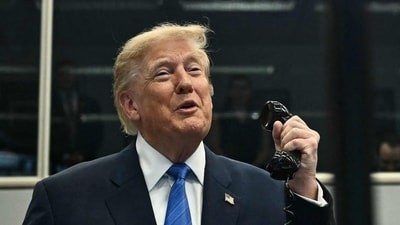
Trump posted the news Friday night on Truth Social. He named the officials involved but gave almost no details on how the deal actually works: “The United States of America has just entered into an Agreement with the Country of Venezuela on, the biggest oil deal in world history! At my direction, Secretary of State Marco Rubio, and Secretary of War Pete Hegseth, working closely with Highly Respected Interim President of Venezuela, Delcy Rodriguez, and, through a partnership with private business, have secured majority U.S. control of more than 65 billion barrels of proven Oil Reserves in Venezuela, at no cost to the American Taxpayer. This historic transaction more than doubles American oil reserves… and will substantially lower gas prices for all Americans, long into the future.”
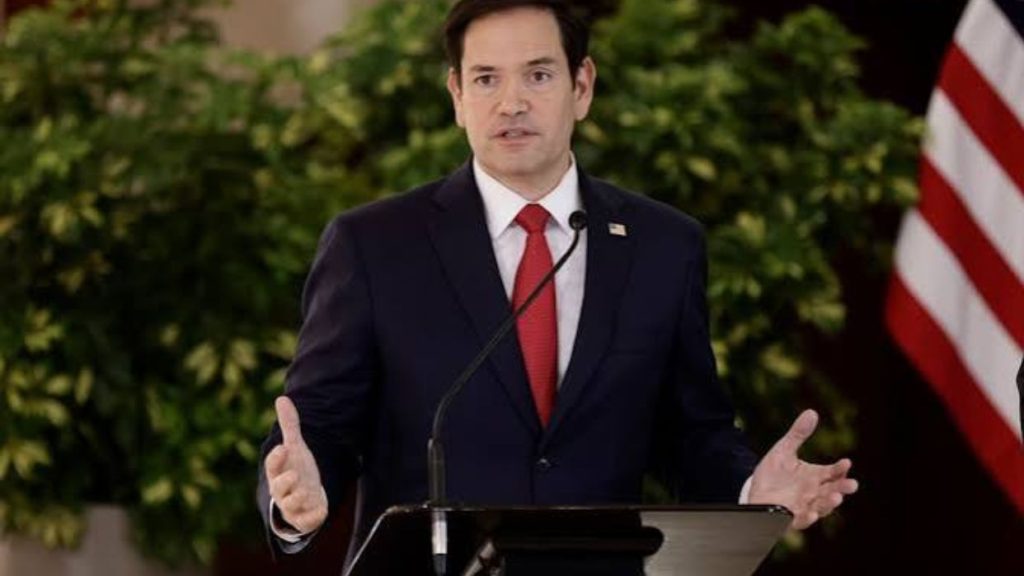
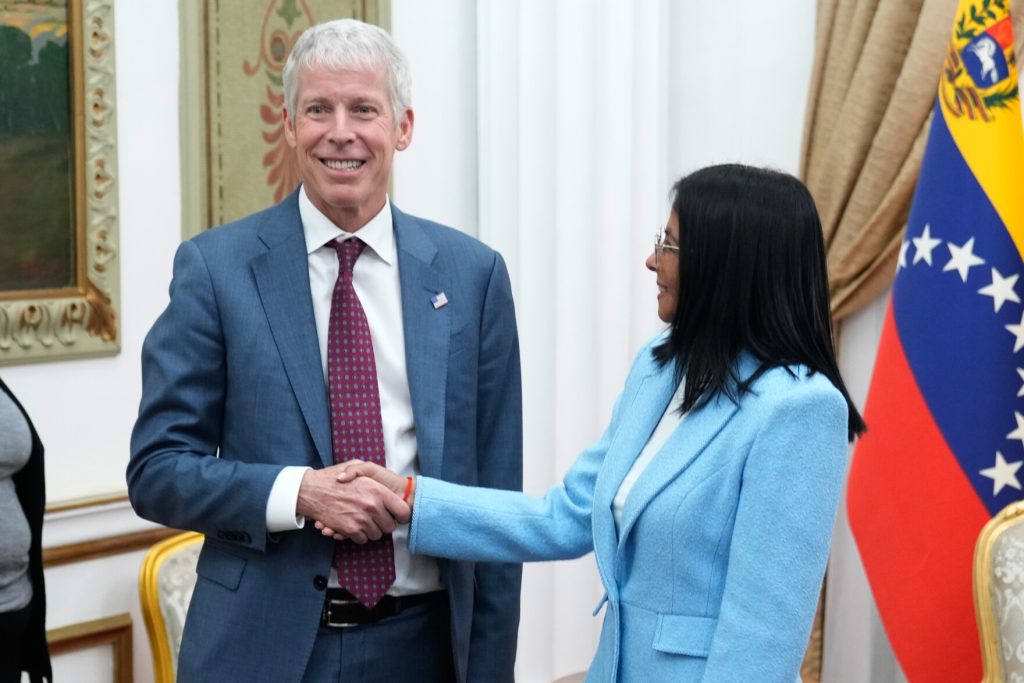
Rubio called it “a huge win for both the American and Venezuelan people” and pointed to nearly $100 billion in future private investment. D. Rodríguez, Venezuela’s interim president, called it a “historic milestone.” She said it covers 17 oil fields holding the 65 billion barrels, with $100 billion in investment and $209 billion in future tax revenue for Venezuela. Neither of them explained how “majority control” would actually work. That detail came later, from someone else.
Whose Words These Actually Are
One thing stands out here. The words “majority control,” “ownership,” and “at no cost to the American Taxpayer” are Trump’s words. Nobody else used them. Rubio talked about “stable reserves and low-cost oil.” D. Rodríguez talked about “private operators” developing fields. Even the one official who gave real detail — speaking to CNN, not named — described something smaller and more specific: a 55% share of a joint venture’s output, split between equity and the right to buy oil at cost. That’s not the same as “controlling” Venezuela’s oil reserves.
This matters because Trump has done this before. In January, he said Venezuela would hand the U.S. 30 to 50 million barrels of oil. Venezuela’s state oil company never confirmed that — it only said talks were happening. So there’s a pattern: Trump announces the biggest possible version of a deal first, and the real terms turn out smaller. Keep that pattern in mind when reading his post.
What This Probably Actually Is
Set Trump’s post aside for a moment. Look only at what Rubio, D. Rodríguez, the CNN source, and Reuters have said, and a clearer picture forms.
Several new, private companies — not one single company — will run 17 oil fields in Venezuela’s Orinoco Belt and Lake Maracaibo region. Together those fields hold about a fifth of the country’s total oil reserves, according to Reuters. Venezuela is not selling these fields. It’s granting 100-year rights to operate them. Inside these deals, the U.S. side gets about 55% of the value, split between owning a stake and getting guaranteed cheap oil. Those are the official’s words, not Trump’s. Venezuela keeps legal ownership of the oil still in the ground.
That last point matters, because it lines up with what we reported yesterday: Venezuela’s new oil law lets foreign companies invest and take a share of output, while Venezuela keeps the resource itself. What’s new here is the size and the length. A fifth of the country’s reserves, locked in for 100 years, is a much bigger bet than the one small deal we knew about so far — Hunt Oil’s agreement on two fields. So this isn’t really a different kind of deal from what we described yesterday. It’s the same kind of deal, just much bigger, and dressed up in ownership language that may not hold up if Venezuela’s own courts look at it closely.
Why go through all this trouble? Because the real goal isn’t for Washington to own Venezuelan oil. It’s to get U.S. companies comfortable enough to come back and invest. ExxonMobil and ConocoPhillips got burned once already — Venezuela nationalized their fields in 2007, and they’re still owed money almost twenty years later. Every piece of this new structure — U.S. courts for disputes, U.S. Treasury handling the payments, a 100-year term, guaranteed cheap oil — is designed to convince investors that won’t happen again. Whether it works depends on one thing: whether the next Venezuelan government, however it comes to power, actually honors the deal.
What We Reported Yesterday
Yesterday’s piece explained the legal framework this is built on: Venezuela’s new oil law, passed in January, and its Production Participation Contracts. Under these contracts, foreign companies invest in a field and get paid back with a share of the oil it produces. Venezuela keeps ownership of the resource. Hunt Oil signed the first such deal earlier this month, covering two fields in eastern Venezuela.
Confirmed: Venezuela Still Owns the Oil
On this point, yesterday’s reporting holds up. Even in the fullest description of the new deal — the one given to CNN — Venezuela grants concessions to private companies. It does not hand over ownership of its oil reserves to the U.S. government.
New Detail: A Real Ownership Stake
Here’s what we didn’t know yesterday. The U.S. isn’t just getting a share of output anymore — it’s getting a real ownership stake — a partial share, not full ownership — alongside guaranteed cheap oil, and together those two pieces add up to roughly 55% of the value of these new joint ventures. That’s a bigger and different kind of arrangement than a standard output-sharing contract. At the same time, Reuters reported that a simple lease model was also under discussion — a sign that even reporters with good sources are hearing different versions of how this actually works, because no one has published the real terms.
Still Unresolved: Is This Even Legal?
The legal problem we raised yesterday hasn’t gone away. Reuters reported this deal could face legal and constitutional challenges in Venezuela, where the state is supposed to keep control over core oil activities. David Goldwyn, a Washington energy consultant, put it bluntly: there is “no precedent” for the U.S. government entering a deal like this, and he doubts it will bring in serious investment given Venezuela’s weak power grid, limited export capacity, and political uncertainty. A 100-year deal with U.S. equity is a much bigger bet on Venezuela’s legal system holding up than a standard oil contract — and that’s exactly the trust problem yesterday’s piece was about.
Still Unknown
Nobody has published the text of any agreement. No company has been named yet, though the Wall Street Journal reports Chevron and other U.S. companies will sign deals next week. Venezuela’s legislature hasn’t approved anything. No U.S. congressional committee has confirmed any of it either. Trump’s own post didn’t name a single field, company, or explain how “majority control” would actually work.
What to Watch Next
Three things will tell us if this is real. First, whether Chevron’s expected signing next week comes with an actual, public contract. Second, whether anyone ever publishes the ownership documents for these joint ventures, which would finally settle whether this is equity or just a lease. Third, whether ExxonMobil and ConocoPhillips — still owed billions from 2007, still sitting on the sidelines — decide to join in. If they do, that’s the clearest sign yet that the trust problem is actually getting fixed, not just talked about.
One more thing to keep in mind while all of this plays out: Rubio isn’t only negotiating oil. He’s also the one leading Washington’s push to move Venezuela back toward genuine elections and functioning institutions. That political track and the oil deal are really the same project. No contract, no matter how it’s structured, fixes the trust problem on its own — what would actually convince investors this is “the deal of the century,” rather than the next one that falls apart, is seeing Venezuela’s politics stabilize alongside it.
Sources: Trump (Truth Social, Aug. 28), Rubio (X, Aug. 28), D. Rodríguez (statement, Aug. 28), Reuters (Jarrett Renshaw et al., Aug. 28), AP (Aamer Madhani, Aug. 28), The Guardian (Tom Phillips, with Reuters, citing WSJ/Axios), Hindustan Times (Anita Goswami, citing a White House official via CNN), Claude (Anthropic AI) — research assistance.
By Elio Ohep, editor@petroleumworld.com
EnergiesNet.com 08 28 2026